Cross-border fraud can be difficult to investigate. A person may operate from one country, use a company registered in another, and receive payments through accounts or business contacts located somewhere else. When different countries are involved, finding reliable evidence becomes more complicated.
For individuals, businesses, and law firms, identifying who is behind a suspected fraud is often the first step toward protecting their interests. However, online searches and public databases are rarely enough to establish what really happened.
Professional international private investigators can help trace information, verify identities, investigate business activities, and collect evidence in the country where the suspected fraud took place.
Why Cross-Border Fraud Requires Professional Investigation
International fraud often involves multiple identities, misleading business information, false documents, and complex financial relationships. Fraudsters may use fake company websites, unauthorized representatives, or local intermediaries to make an operation appear legitimate.
Another challenge is that records and investigative procedures differ from one country to another. Information that is easy to obtain in one jurisdiction may require specialized local knowledge in another.
This is why hiring a professional investigation company with experienced investigators on the ground in the country is so important. Local investigators understand the language, business environment, available records, and practical methods for verifying information.
A database search alone cannot confirm whether a company has real operations, whether someone actually works at a particular address, or whether a business representative is telling the truth.
How Private Investigators Trace Evidence Across Borders
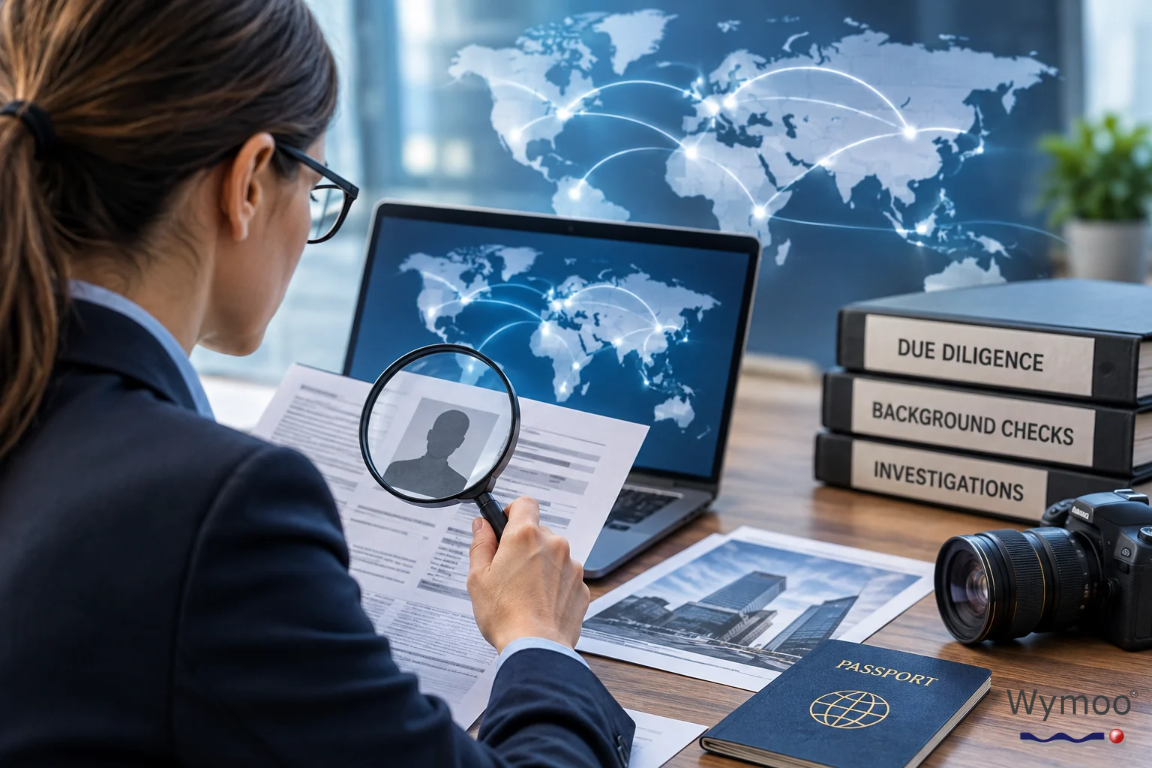
A professional cross-border fraud investigation usually involves several investigative steps, depending on the case and the information available.
1. Verifying Identities and Background Information
The first step is often determining who the people involved really are. Investigators examine available identity information, employment history, business connections, addresses, and other relevant background details.
An International Background Check Investigation can help establish whether an individual’s identity and professional history match the information provided.
Investigators may also review available criminal and civil records, court information, media reports, and other relevant sources.
This is particularly important when someone uses different names, provides misleading credentials, or claims to represent a foreign company.
2. Investigating Companies and Business Relationships
Many international fraud cases involve companies that appear legitimate but have little or no actual business activity.
An International Due Diligence Investigation can help verify a company’s legal registration, ownership, business address, operations, reputation, and known representatives.
Professional investigators may conduct local inquiries to determine whether the business operates at its stated location and whether the people representing it have genuine connections to the organization.
This type of investigation is especially useful before making an overseas investment, signing a business agreement, or transferring money to a foreign supplier or partner.
3. Conducting Local Inquiries and Surveillance
Sometimes documents and online information are not enough. Physical verification may be necessary to establish whether a person, business, office, or property actually exists.
Through Private Investigations and Covert Surveillance, professional investigators can conduct discreet field inquiries, observe relevant activities, verify locations, and document findings when appropriate and lawful.
Local investigators can provide valuable information that cannot be obtained through an internet search alone.
For example, a company may advertise a large international operation, but a local investigation may reveal that its registered address is only a mailing location or that the business does not operate as claimed.
4. Tracing Potential Assets and Business Connections
In some fraud cases, identifying the people responsible is only part of the problem. Clients may also need to understand whether individuals or companies have identifiable assets or business interests in another country.
A global asset search investigation can help identify real estate, property records, and companies registered under an individual’s or entity’s name. Investigators may also research corporate relationships and other available information that helps establish connections between people, businesses, and assets.
Asset searches can be particularly valuable for attorneys, investors, and businesses dealing with international fraud or financial disputes.
Why Local Investigators Make a Difference
One of the biggest mistakes clients make when investigating overseas fraud is relying entirely on online background check websites or automated database searches.
These tools may provide basic information, but they cannot replace a professional investigation conducted by someone who understands the country.
Experienced local investigators can communicate in the local language, identify relevant information sources, conduct field inquiries, and evaluate whether the evidence makes sense within the local context.
They can also help identify inconsistencies that may otherwise go unnoticed.
When hiring an international investigation company, it is important to choose a firm with professional investigators or experienced specialists in the country where the investigation is needed. Having a local presence can make a significant difference in the quality and reliability of the findings.
What Can Clients Expect from an International Fraud Investigation?
Every case is different. The investigative approach depends on the country, the people or companies involved, the available information, and the type of evidence required.
Depending on the assignment, a professional investigation may include identity verification, company research, background checks, local inquiries, surveillance, asset searches, and the review of available public and court records.
Clients should expect a clear investigative report explaining what was verified, what evidence was obtained, and what information could not be confirmed.
It is also important to understand that investigators cannot guarantee that assets will be recovered or that every allegation will be proven. Their role is to uncover facts and provide reliable information that helps clients determine their next steps.
Protect Yourself Before International Fraud Becomes a Bigger Problem
Cross-border fraud can affect businesses, investors, individuals, and legal professionals. Once money has been transferred or important evidence has disappeared, investigating the situation may become more difficult.
Whether you suspect a fraudulent overseas company, need to verify a foreign business partner, or want to investigate an individual involved in a financial dispute, professional investigators can help establish the facts.
Wymoo International provides confidential international background check investigations, due diligence, private investigations, surveillance, and global asset searches in more than 100 countries.
With professional investigators on the ground in the countries where clients need assistance, Wymoo focuses on verifying information, uncovering evidence, and helping clients make informed decisions.
When dealing with international fraud, real evidence matters. Choose professional investigators who know the country and can investigate the facts on the ground.
C. Wright
© Copyright Wymoo International. All Rights Reserved. This content is the property of Wymoo International, LLC and is protected by the United States of America and international copyright laws. Wymoo® is a registered trademark.